Recipes
Protein Pancakes With Protein Powder (or Without)
Protein pancakes with one scoop of whey, oats, egg and yogurt: 23 g protein per serving, plus cottage cheese and Kodiak swaps and fixes for dry, flat ones.
RepKitchen
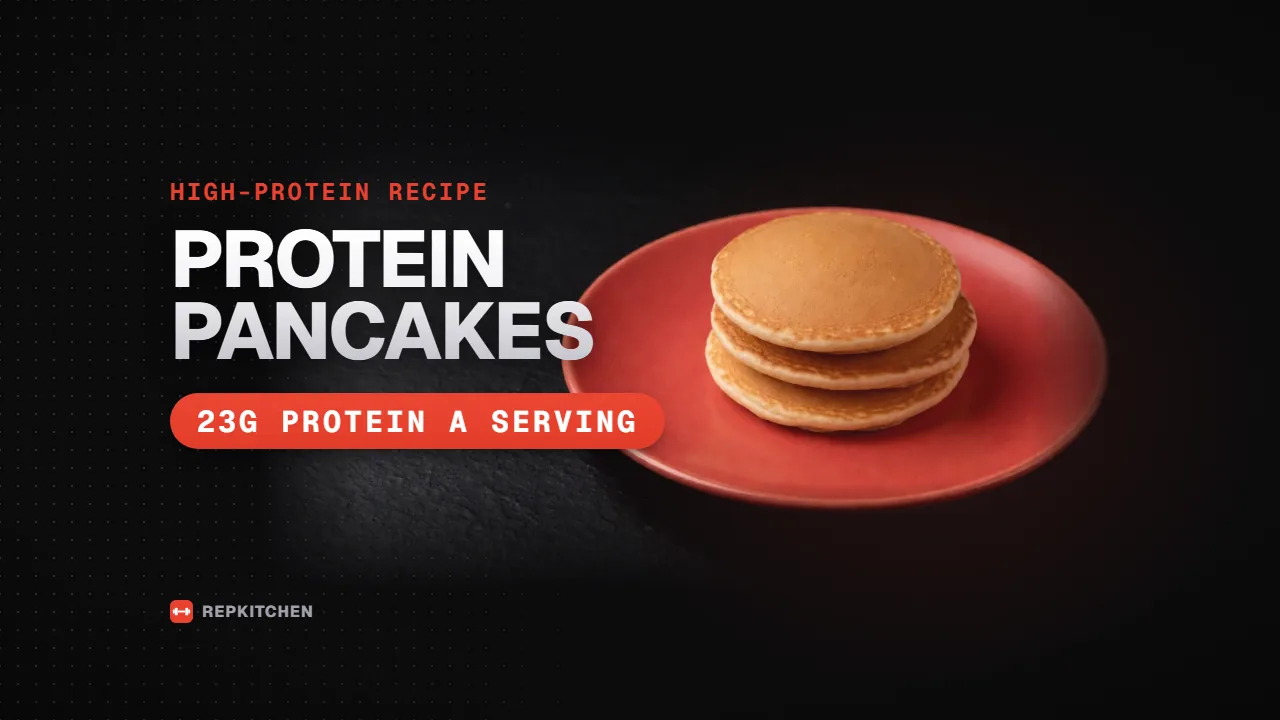
Use one scoop of whey, half a cup of oats, an egg, a little Greek yogurt and milk, and a teaspoon of baking powder. Blend it, rest it 5 minutes, and cook small pancakes over medium-low heat. One batch makes about 6 small pancakes with roughly 45 g of protein and 415 calories. That's a big breakfast for one person, or about 23 g of protein each if you split it with someone.
How to make protein pancakes with protein powder
This is the batter I'd start anyone on. It holds together, it flips without tearing if you keep the pancakes small, and it tastes like breakfast rather than a supplement.
Ingredients (1 batch, about 6 small pancakes)
- 1 large egg (50 g)
- 1/3 cup whey protein powder (32 g), about one scoop
- 1/2 cup old-fashioned or quick oats (40 g)
- 1/4 cup plain nonfat Greek yogurt (about 57 g)
- 1/3 cup 2% milk (82 g)
- 1 tsp baking powder (4.6 g)
- Cinnamon and vanilla, to taste
- Butter or oil for the pan
A note on the scoop: go by the gram weight printed on your own tub, not the scoop that came in it. Scoop sizes vary a lot between brands and flavors. For reference, Optimum Nutrition Gold Standard 100% Whey lists 24 g of protein per scoop for its standard flavors. If your scoop gives you a few grams more or less than 25 g, the totals below move by the same amount.
Steps
- Put everything in a blender and blend until smooth, about 30 seconds.
- Let the batter rest 5 minutes so the oats soak up some of the liquid and it thickens a little.
- Heat a nonstick pan over medium-low and grease it lightly.
- Pour small pancakes, about 3 to 4 inches across.
- Flip when small bubbles show on top and the edges look dry and set, usually 2 to 3 minutes.
- Cook the second side another 1 to 2 minutes, until the center is set.
You'll know they're done when you press the middle and no wet batter seeps out, and the inside looks cooked when you tear one open. Anything with egg in it should reach 160°F, but a thermometer is hard to use on something this thin, so the set-center test is your real guide.
Don't have a blender? You can still make these. Use quick oats or oat flour instead of old-fashioned oats, and whisk everything hard in a bowl. Old-fashioned oats stay chunky without a blender, and the pancakes fall apart more easily. A blender does give you the smoothest batter, so use one if you have it.
Nutrition per serving
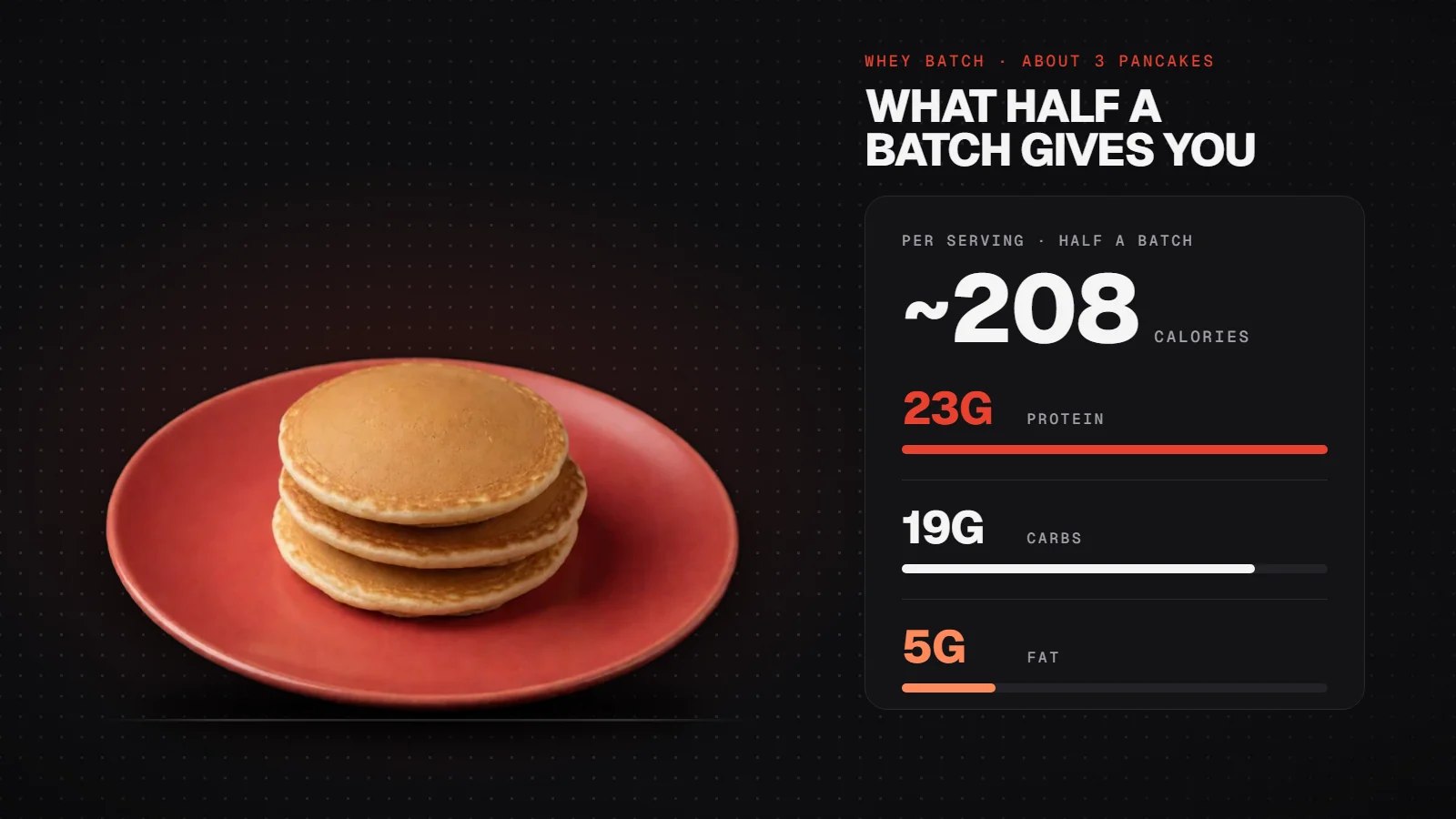
Whole batch: about 415 calories, 45 g protein, 37 g carbs, 10 g fat. Half a batch: about 208 calories, 23 g protein, 19 g carbs, 5 g fat.
These numbers are worked out from the ingredient weights above. They don't include what you grease the pan with. A tablespoon of butter adds 102 calories, and a light wipe of oil or spray adds much less.
How much of your breakfast protein this covers
A common guide for people who train is about 20 to 40 g of protein per meal. Another way to put it is roughly 0.25 g per kilogram of body weight at each meal.
Say you weigh 70 kg (about 154 lb). At 0.25 g per kg, that's about 18 g at a meal. Half a batch at 23 g covers it with room to spare. The whole batch at 45 g goes well past it, which is fine if you're hungry or it's a big post-workout breakfast. You don't need it, though.
So if you're making these a few mornings a week, half a batch is probably your serving, and the rest goes to someone else or into the fridge. And if you're going to eat these regularly, they have to be pleasant to eat, which is where most people's first attempts go wrong.
Why your protein pancakes came out dry, rubbery or flat
Most bad protein pancakes come from a short list of mistakes. Here's what each one looks like and how to fix it.
Dry and rubbery: the whey firmed up
Whey sets fast once it hits heat. Cook it a minute too long and you get that squeaky, chewy disc. The yogurt and milk in the recipe are there to keep things tender, so don't skip them to save calories. If your pancakes still come out dry, add another tablespoon or two of milk and pull them off the pan as soon as the center sets.
Dry and dense: too much powder
This is the most common one. You think "two scoops, double the protein" and end up with something closer to a protein bar than a pancake. One scoop per batch is the limit. If you want more protein at the meal, put it on top (more on that further down) rather than in the batter.
Flat: the lift is gone
Flat pancakes usually come from one of three things:
- Old baking powder. It loses strength once the can has been open a while. Drop a pinch in hot water: if it doesn't fizz hard, replace it.
- Overmixing. Blend until smooth and stop. If you're whisking by hand, stop once it comes together.
- Batter that sat too long. The 5-minute rest helps the oats. A 45-minute rest lets the baking powder lose some of its lift before the batter ever hits the pan.
Burnt outside, raw middle: the pan is too hot
These batters brown faster than flour pancakes. On medium-high, the outside goes dark before the middle has set. Medium-low feels slow, but it's how the center cooks through while the outside stays golden.
Torn when flipped: too big
There's no flour holding these together, so they're more fragile than diner pancakes. A 6-inch pancake will fold and rip when you flip it. Keep them at 3 to 4 inches and flip with a thin spatula.
A lot of these problems trace back to the type of powder you're using, so that's worth sorting out next.
Whey or plant protein: which one to use
My verdict: use whey if you can. It tastes cleaner, makes a lighter pancake, and doesn't fight the other flavors. Use a plant powder if you're avoiding dairy, and adjust the batter for it.
Plant powders soak up more liquid and make a denser, thicker batter. Start with 2 to 4 extra tablespoons of milk (or a dairy-free milk), and add more if the batter is stiffer than thick cream.
They also tend to carry more carbs and sugar. Per 100 g, a typical soy-based powder has 28.9 g of carbs against 6.25 g for whey. In the pan, that means plant-protein pancakes come out a little sweeter and brown faster, so turn the heat down a notch and watch the first side.
If you don't like the taste of either, or just don't want to buy a tub, you can skip powder altogether.
Protein pancakes without powder: cottage cheese or Greek yogurt
These get their protein from dairy and eggs instead of a scoop. Blending the cottage cheese smooth is what makes it work.
Ingredients (2 servings)
- 1 cup 2% cottage cheese (220 g)
- 2 large eggs (100 g)
- 1/2 cup oats (40 g)
- 1 tsp baking powder (4.6 g)
Steps
- Blend everything until completely smooth, with no curds left.
- Rest the batter 5 minutes.
- Heat a greased nonstick pan over low to medium-low, a bit lower than for the whey version.
- Pour 3-inch pancakes.
- Flip when the edges look set and the top has lost its shine, about 3 minutes.
- Cook the second side 1 to 2 minutes, until the center is set when you press it.
Nutrition per serving
About 241 calories, 21 g protein, 19 g carbs, 9 g fat.
If you buy Good Culture 2% cottage cheese, the label gives 14 g of protein and 90 calories per 1/2 cup (110 g). So a cup of it has about the same calories as the numbers above but around 28 g of protein instead of 24 g, which puts each serving about 2 g of protein higher.
Swapping in Greek yogurt
Plain nonfat Greek yogurt can replace the cottage cheese 1:1 by weight. Those 220 g of yogurt bring about 134 calories and 23 g of protein, compared with 185 calories and 24 g from the cottage cheese. Per serving, you end up around 216 calories and 20 g of protein, with a bit less fat. For a reference brand, Oikos Triple Zero plain lists 18 g of protein and 100 calories per 3/4 cup (170 g).
Salt and texture
Cottage cheese is salty (321 mg of sodium per 100 g), and baking powder adds more. Don't add any salt to this batter. If the cooked pancakes taste too salty to you, use 1/2 tsp of baking powder next time.
Be ready for the texture. These turn out custardy, tender and a little eggy, closer to a soft crepe than a fluffy diner stack. Some people love that and make this version on purpose. If you want height and fluff, the next option is closer.
The shortcut: a boxed protein mix or regular mix plus a scoop
Kodiak Power Cakes
Kodiak's Buttermilk Power Cakes mix is the easiest route. One serving of the mix is 220 calories, 15 g protein, 37 g carbs and 2.5 g fat, and a box holds about 9 servings. Water adds nothing to that. Make it with milk instead of water and protein goes up to about 18 g. Use milk and eggs and it reaches about 21 g.
It's the fluffiest version here by a long way, because there's flour doing the work. The trade-off is carbs: you get 37 g of carbs to reach 15 g of protein, while half the scratch whey batch gives you 23 g of protein for 19 g of carbs.
Regular mix plus a scoop
If you already have a box of regular pancake mix, you can stir in protein powder. Make a single portion as the box says, add one scoop of powder, then add a few extra tablespoons of milk or water, because the powder drinks liquid. Mix until just combined and leave the lumps. The numbers depend on your box, so add the label figures to your scoop's figures.
My verdict: if you want fluffy pancakes with no fuss, Kodiak is worth it. If you want the most protein for the fewest carbs, the scratch whey batch wins and takes about two minutes longer.
How the options compare per serving
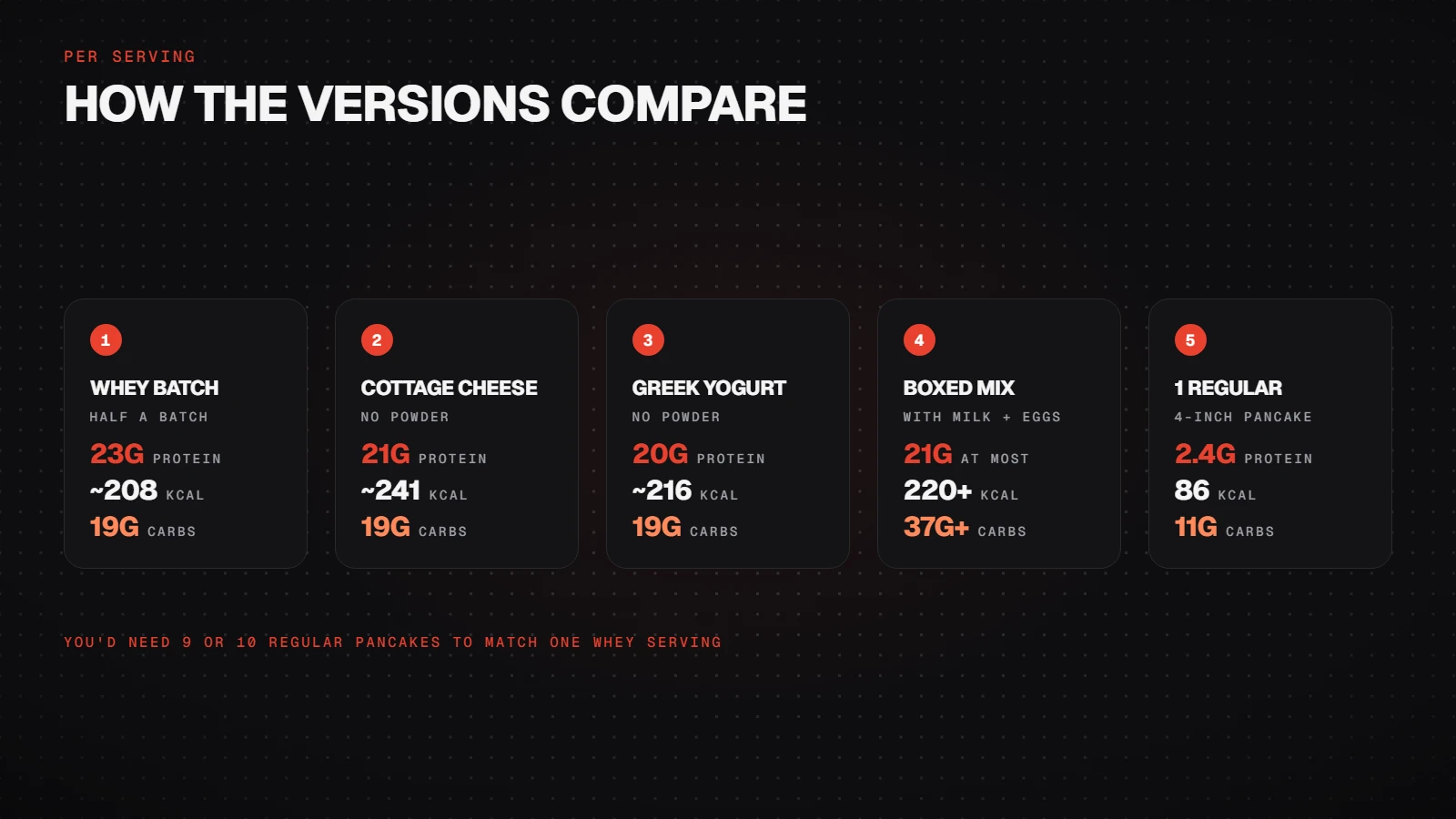
| Version (1 serving) | Calories | Protein | Carbs | Texture |
|---|---|---|---|---|
| Whey batch (half) | about 208 | 23 g | 19 g | Soft, light, holds together |
| Cottage cheese batch | about 241 | 21 g | 19 g | Custardy, tender, a bit eggy |
| Greek yogurt swap | about 216 | 20 g | 19 g | Custardy, slightly tangy |
| Kodiak with milk and eggs | over 220 (milk and eggs add to it) | up to 21 g | 37 g plus a little from the milk | Fluffy, closest to a diner pancake |
| Regular 4-inch pancake (1) | 86 | 2.4 g | 11 g | Classic, fluffy |
That bottom row is why protein pancakes exist. A regular pancake has about 2.4 g of protein, so you'd need a stack of nine or ten to match one serving of the whey batch.
For most people training at home, I'd make the whey batch the default and keep a box of Kodiak for lazy weekends. Pick cottage cheese if you don't use powder or you like the softer texture.
Flavors, swaps and allergens
Flavors
- Chocolate: blend in 1 to 2 tbsp of cocoa powder with a splash more milk, since cocoa thickens the batter.
- Blueberry: pour the batter first, then drop berries onto each pancake. Blending them in turns everything purple. Frozen berries go straight on without thawing.
- Banana: half a mashed banana adds sweetness and moisture. The base recipe doesn't need it, so skip it if you don't like banana.
Gluten-free
Oats don't contain gluten, but they often get mixed with wheat, barley or rye in the field and during harvest, transport and storage, and shared factory equipment can add more. If you need to avoid gluten, buy oats labeled gluten-free. That label means they contain less than 20 ppm of gluten.
Dairy-free
- Use a plant protein powder with the extra 2 to 4 tbsp of liquid.
- Use unsweetened almond milk. It adds almost no protein (about 0.66 g per 100 g), so don't count on it.
- Use a dairy-free yogurt in place of the Greek yogurt.
Almond milk is a tree nut, and soy protein powder is soy, so those swaps bring in different allergens.
Allergens to watch
Depending on which version you make, these pancakes can contain eggs, milk (including whey, yogurt, cottage cheese and butter), wheat (from a mix or flour), soy (soy protein powder) and tree nuts (almond milk). If you're cooking for someone else, check every label, including the protein powder.
Toppings that add protein
Greek yogurt, cottage cheese or a spoon of nut butter all work. Here's how much a yogurt topping adds: put 100 g of plain nonfat Greek yogurt (a bit under half a cup) on half a whey batch and you add about 61 calories and 10 g of protein. That brings breakfast to about 33 g of protein.
Making a batch for the week: storing, freezing and reheating
Handling the raw batter
Don't taste the batter. Raw eggs can carry Salmonella, and raw flour in a mix can carry germs too until it's cooked. After mixing, wash your hands with soap for at least 20 seconds, and wash bowls, utensils and the counter with hot, soapy water. The CDC's page on raw flour and dough covers the details.
Cooling and the fridge
- Get cooked pancakes into the fridge within 2 hours, or within 1 hour if your kitchen is above 90°F.
- Cool them in a single layer on a wire rack. They cool faster that way and don't steam themselves soggy in a pile.
- Store them covered or in a sealed container, in a fridge at 40°F or below.
- Eat them within 3 to 4 days. Not a full week.
Freezing
- Your freezer should be at 0°F or below.
- Lay the cooled pancakes flat on a tray and freeze until firm, about 1 hour.
- Move them to a freezer bag with a square of parchment between layers so you can pull out two at a time.
- They're best within 3 to 4 months. They stay safe longer than that, but they dry out and lose flavor.
Reheating
Thaw them in the fridge overnight or reheat straight from frozen. A toaster, microwave or oven all work. Reheat to 165°F. Without a thermometer, look for pancakes that are steaming hot all the way through, center included, with no cold spots.
In the microwave, cover them with a damp paper towel so they don't turn leathery. Two fridge-cold pancakes take about 30 to 45 seconds. From frozen, give them a minute or so, flipping halfway. In the toaster, they come out crisp at the edges, which is my favorite way.
Example: a Sunday double batch
You make two batches on Sunday morning, about 12 pancakes, or 4 servings of 3. You eat 3 for breakfast that day. Six go into a container in the fridge for Monday and Tuesday. The last 3 go in the freezer, and later in the week you microwave them straight from frozen. Nothing sits in the fridge longer than 2 days, and you only cooked once.
FAQ
Can I make the batter the night before?
You can, but the pancakes come out flatter, because the baking powder loses some of its lift overnight and the oats keep thickening the batter. A better plan is to measure the dry ingredients into the blender jar the night before and add the egg, yogurt and milk in the morning. If you do mix it all ahead, keep it covered in the fridge, add a splash of milk to loosen it, and expect less rise.
How many pancakes is one serving?
For the whey recipe, half a batch is about 3 small pancakes, with 23 g of protein. If you're hungry or it's after a hard session, eat the whole batch of about 6.
Can I use a different protein powder flavor?
Yes. Vanilla and unflavored are the easiest to work with. Chocolate is good with blueberries or banana. Fruity or dessert flavors can taste odd once they're cooked, so try a half batch first. Check the grams and protein per scoop on the new tub, since they can differ from flavor to flavor.
Why do my cottage cheese pancakes taste salty?
Cottage cheese is naturally salty, and baking powder adds sodium too. Make sure you're not adding any salt, and cut the baking powder to 1/2 tsp. A lower-sodium cottage cheese also helps if you can find one.
Can I microwave them from frozen?
Yes. Give them about a minute for two pancakes, flip them halfway, and cover them with a damp paper towel so they stay soft. They're ready when they're steaming hot right through to the center.