How to Do a Burpee: Form, Benefits and Easier Versions
How to do a burpee: squat, hands down, jump back to a plank, jump in, stand and jump. The push-up is optional. Plus 5 form fixes and easier versions.
- Difficulty
- Intermediate
- Equipment
- None
- Sets
- 3 × 5–10 reps
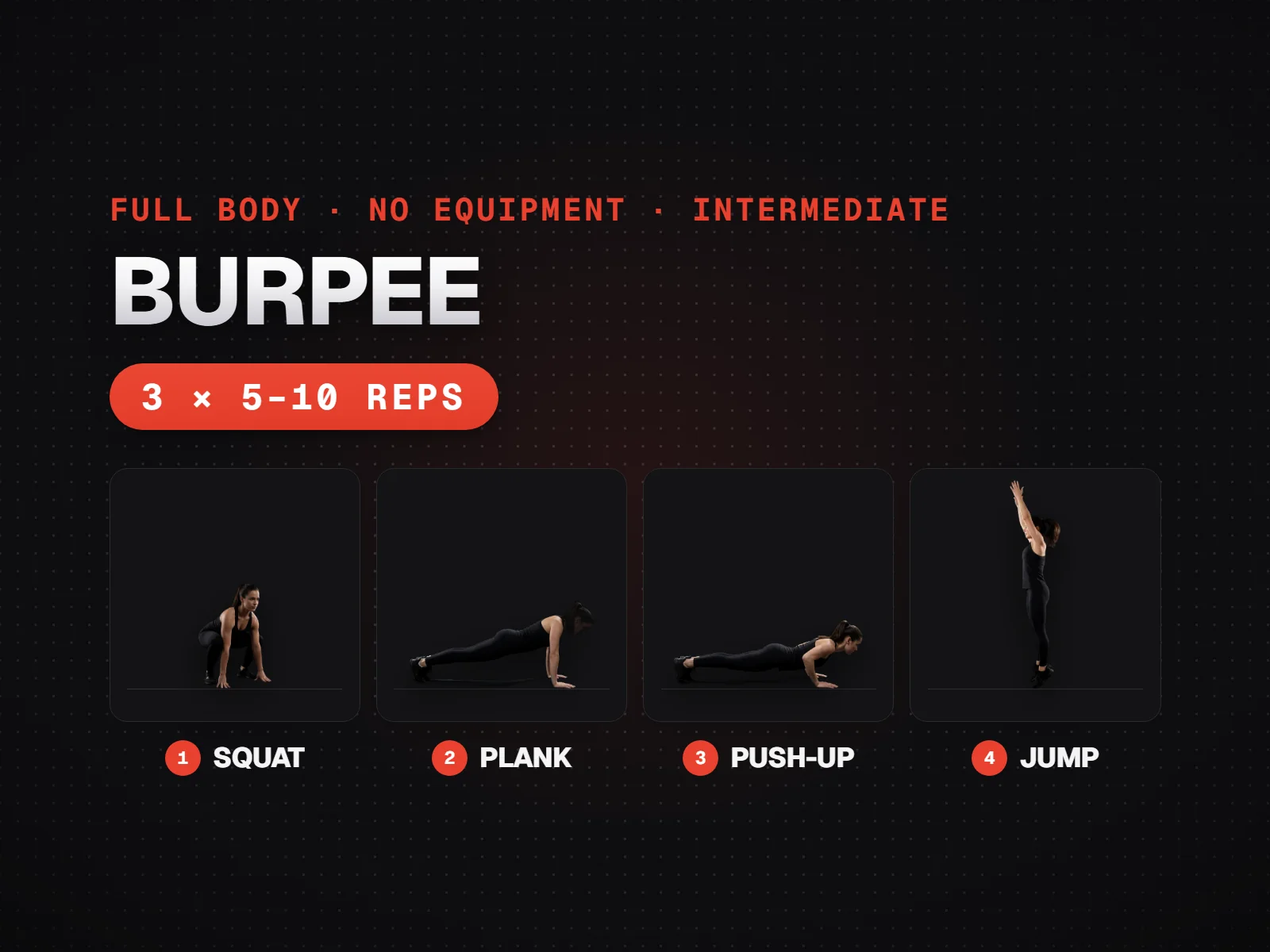
Here's how to do a burpee: squat and put your hands on the floor, jump back to a plank, jump your feet back in, then stand up and jump. That's the whole move. A lot of people add a push-up while they're in the plank, but it's an extra, not a requirement. If you've been forcing out ugly push-ups because you thought they were mandatory, you can stop.
Burpees feel rough because they're built to be rough. The smart way in is to start with a version you can do cleanly and work up from there. Below you'll find the full move step by step, the mistakes that make it feel worse than it should, an easier and a harder ladder, and how many to do.
How to Do a Burpee, Step by Step
Before you start, make sure you can reach your arms overhead and jump without hitting a ceiling fan or a coffee table. A living room works fine as long as you have about a body length of clear floor.
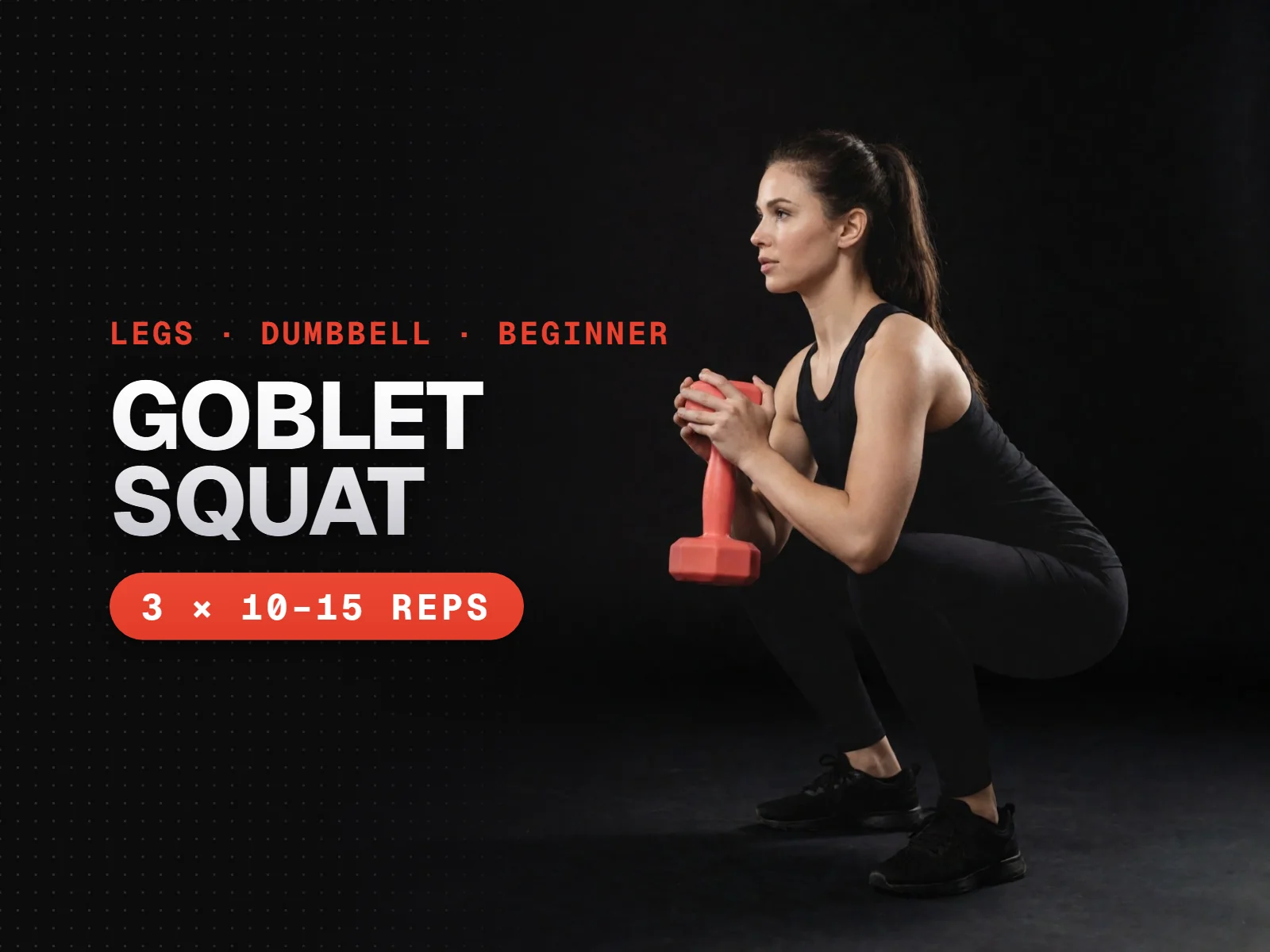
- Stand with your feet hip-width apart, about the width of your fists side by side, not shoulder-width. Let your arms hang relaxed.
- Brace your core. Imagine someone's about to poke you in the stomach and you tighten up without holding your breath. That's the feeling.
- Squat down and put your hands flat on the floor just outside your feet. Your hands should land beside your shoes, not way out in front of them.
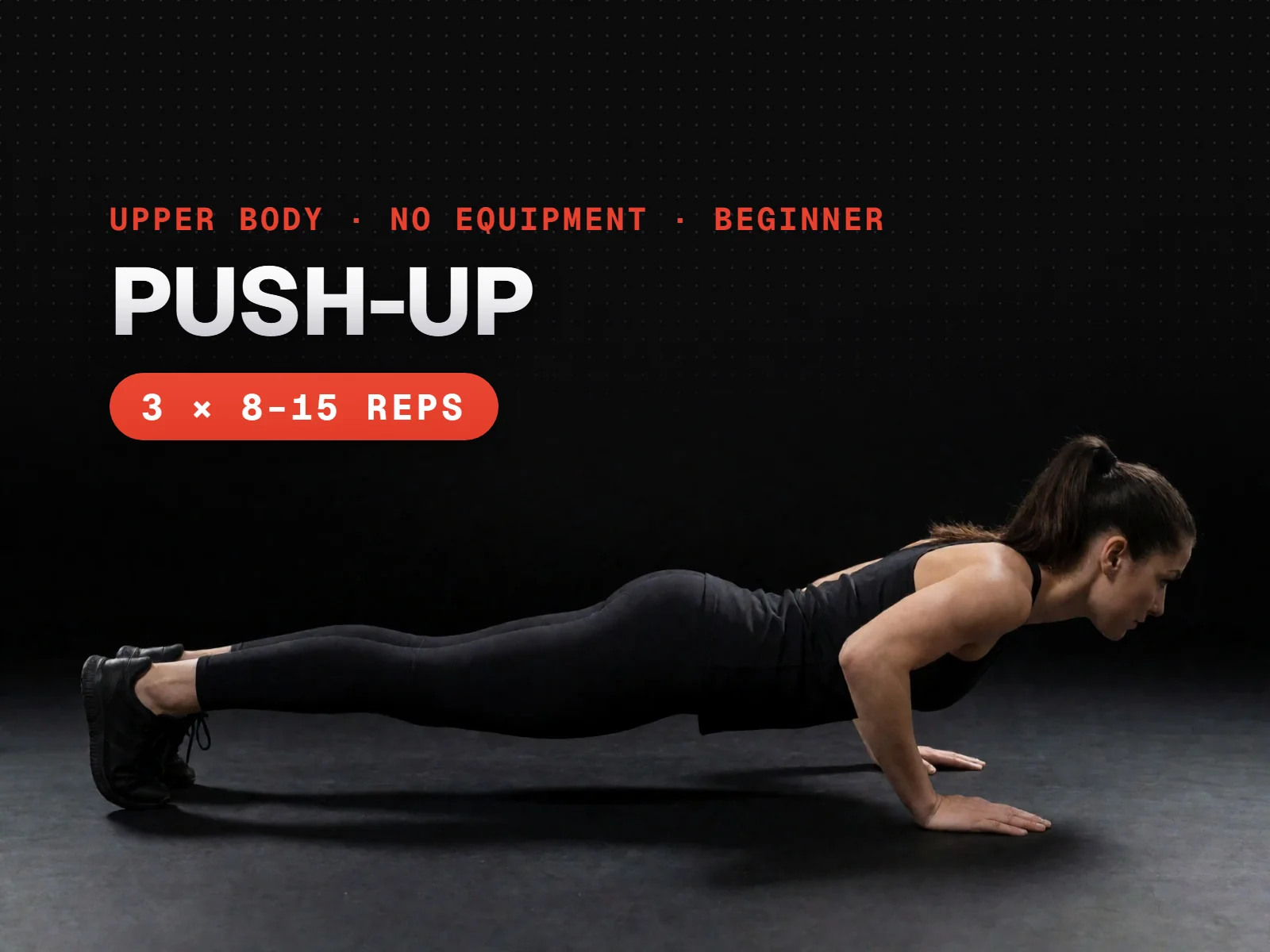
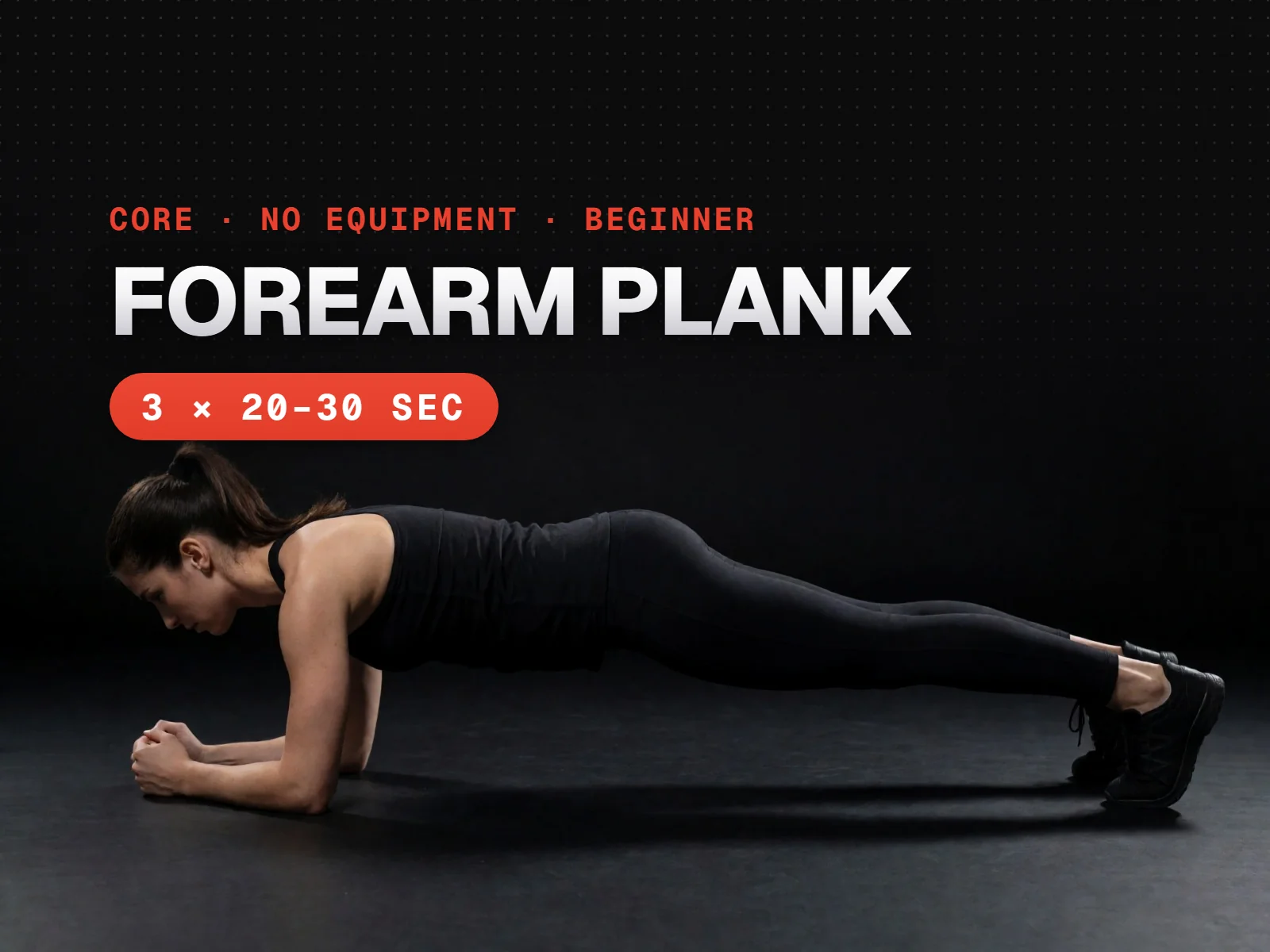
- Jump or step your feet back so you're in a push-up position. Your body should make a straight line from your head to your heels.
- Do one push-up (optional). Lower your chest under control and press back up.
- Jump your feet back in toward your hands, landing in a low squat.
- Jump straight up and reach your arms overhead.
- Land softly with your knees bent, take a breath, and move into the next rep with steady breathing.
A couple of cues help. When you're in the plank, look at the floor a little ahead of your hands so your neck stays in line with your back. When you land from the jump, think "quiet feet." If your landings sound like a dropped box of books, your knees are probably too straight.
Burpee vs. Squat Thrust: Where the Push-Up Fits
The burpee grew out of an older, simpler move called the squat thrust. The squat thrust is a 4-count move: hands down (1), legs back to a plank (2), feet back in (3), stand up (4). A burpee is that same thing with a jump added once you're standing.
The push-up is a separate add-on. Some workouts include it and some don't, and both are still burpees. If a class or app says "burpees" and doesn't mention a push-up, you're not cheating by leaving it out.
So when you do an easier version, you're doing the same exercise with a piece removed, not a "lesser" move. A squat thrust is a burpee without the jump. A burpee without the push-up is a burpee. You build the full thing by adding pieces back in.
Muscles Burpees Work
The main workers are your quads (fronts of your thighs), your chest and your glutes. Your quads and glutes drive the squat and the jump, and your chest holds you up in the plank and does the push-up if you add one.
Helping out are your triceps (backs of your upper arms), your shoulders, the muscles around your midsection that keep you steady, and your hip flexors, which pull your knees forward when you jump your feet back in.
That's a lot of muscle switching on and off in about 3 seconds, and it's why burpees wear you out so fast. Your legs get tired from the squatting and jumping, your arms and chest get tired from the plank, and your breathing climbs the whole time. When everything is tired at once, form is the first thing to go, which is where most of the mistakes come from.
5 Common Burpee Mistakes and How to Fix Them
1. Landing with straight knees
If you land from the jump with locked legs, your joints take the hit instead of your muscles. You'll often hear it as a loud thud.
Fix: Land on the balls of your feet and let your knees and hips bend as you touch down, like you're sinking into a shallow squat. Aim for quiet landings.
2. A sloppy push-up, or skipping it when it's part of the set
When people get tired, the push-up turns into a belly flop: chest hits the floor, hips stay down, then they peel themselves up like a worm. Others quietly drop the push-up halfway through a set that's supposed to include it.
Fix: If the push-up is in your plan, lower your chest under control and press up with your body in one straight line. If you can't do that anymore, finish the set without it on purpose, or move to the no-push-up version for your next set. Choosing to leave it out is fine. Letting it fall apart isn't.
3. Hips sagging in the plank
When your hips droop toward the floor, your lower back takes the strain your core should be handling.
Fix: Squeeze your glutes and keep that braced-stomach feeling from step 2. If you can't hold a straight line after jumping back, step back instead so you can land in the plank with more control.
4. Going so fast your form falls apart
Burpees invite rushing. You want the set over with, so you speed up and everything gets sloppy at once.
Fix: Slow down until every rep looks the same. A set of 5 good burpees beats a set of 15 messy ones. Speed is something you add after the movement feels automatic.
5. Not landing and resetting between reps
A common habit is to jump, then dive straight down for the next rep before your feet have properly landed. That's how you end up landing awkwardly and crashing into the floor.
Fix: Finish each rep standing tall on soft knees. Take a breath, then start the next one. It only takes a second, and it keeps every rep under control.
Easier Versions: Start Low on the Ladder
If burpees feel like too much right now, you're not behind. NASM describes the traditional burpee as an advanced move that needs a decent base of strength and movement skill. Starting a few rungs down is the normal way in, not a shortcut.
Think of it as a ladder. Stay on a rung until you can do all your planned reps with clean form, then move up one.
- Squat thrust, stepping: Squat, hands down, step one foot back and then the other into a plank, step them back in one at a time, and stand up. No push-up, no jump.
- Jump back and in: Same move, but jump both feet back to the plank and jump them back in. Still no jump at the top.
- Add the jump at the top: Once you're standing, jump up and reach overhead. This is a standard burpee without the push-up.
- Add the push-up: Do one controlled push-up in the plank before jumping your feet in. This is the full burpee.
There's also a side option worth knowing about: the step-back burpee. You step back and in like rung 1, but you still do the jump at the top. It's good for people who want the jump but find the jump back into the plank hard on their wrists or shoulders, or hard to control.
Here's how the versions compare, so you can pick today's rung:
| Version | Jump back? | Push-up? | Jump at top? | Good for |
|---|---|---|---|---|
| Squat thrust (stepping) | No, step back and in | No | No | Total beginners, learning the pattern, low-impact days |
| Step-back burpee | No, step back and in | No | Yes | Practicing the jump while keeping the plank calm |
| Standard burpee, no push-up | Yes | No | Yes | Most people doing home workouts |
| Burpee with push-up | Yes | Yes | Yes | People who can do solid push-ups when tired |
| Tuck-jump burpee | Yes | Optional | Yes, knees to chest | Experienced trainees who want more power |
Harder Burpee Variations
Once the full burpee with a push-up feels smooth for all your sets, you have plenty of ways to make it harder. Pick one at a time.
- Tuck-jump burpee: At the top, jump higher and pull your knees toward your chest before landing softly.
- Box-jump burpee: After you stand up, jump onto a sturdy box or step instead of straight up, then step back down for the next rep.
- Plyometric push-up burpee: In the plank, push up hard enough that your hands leave the floor for a moment, then catch yourself softly.
- Single-leg squat thrust: Lift one leg and jump back and in on the other one only. Switch legs each set.
- Single-arm squat thrust: Put only one hand on the floor and keep the other one off. It makes your core work hard to keep you level. Switch hands each set.
- Offset stance: When you jump your feet in, land with one foot in front of the other. Switch which foot goes in front each rep to make it tougher.
- Rolling squat: After you jump your feet in, sit down, roll onto your back with your knees tucked, then roll forward and come up to standing.
- Surfer: Jump your feet into a low, staggered stance like you're riding a surfboard, then go straight back to the plank without standing up between reps.
How Many Burpees to Do: Sets, Reps and Rest
A good starting point, from NASM, is 3 to 5 sets of 5 to 10 reps, with complete rest between sets. Complete rest means waiting until your breathing has settled and you feel ready to do another set well, not just until you can stand up straight. For most people, that's somewhere around 1 to 3 minutes.
That might sound like too little. It isn't. When you're tired, your form slips, and sloppy form is how people end up hurt. Quality comes first, and the numbers can go up later.
If you like intervals, here's a short one that has been used in a training study: 10 all-out efforts of 4 seconds each, with 30 seconds of easy recovery between them. The whole thing takes about 8 minutes. It's short but hard, so save it until you're comfortable with whichever burpee version you're doing.
As for where burpees fit in your week, the Physical Activity Guidelines for Americans call for 150 to 300 minutes of moderate aerobic activity a week, plus muscle-strengthening work on at least 2 days. Burpees can count toward both, since they get your heart rate up and make your legs, chest and arms work.
Example: a beginner's first two weeks
Say you're new to this and you can do a stepping squat thrust comfortably, but a full burpee leaves you on the floor. You train 3 days a week, on Monday, Wednesday and Friday.
Week 1: Do 3 sets of 6 stepping squat thrusts with full rest. By Friday, if all 18 reps looked clean, try 3 sets of 8.
Week 2: Move up to jumping back and in. Do 3 sets of 5. If that goes well by midweek, add the jump at the top for your last set.
At the end of two weeks, you might be doing standard burpees without a push-up, or you might still be on rung 2. Either is fine. What matters is that every rep looked the way it should.
Are Burpees Good Cardio?
Yes, they push your heart and lungs hard. In a 2014 study, people doing all-out bursts of burpees reached about 85% of their peak heart rate, close to what they hit doing all-out sprint intervals on a bike. A 2015 study comparing different exercises found burpees used more oxygen than squats, deadlifts and lunges done with heavy weights. Only a battling-rope circuit beat them.
Two more findings are useful. In a 2022 study, people rated short burpee intervals as more enjoyable than a steady run of about 6 minutes, but they were also sorer 2 days later. And a 2024 study that put active adults on a very short burpee program, the 8-minute interval session above, found their jump height improved, but their body composition and blood pressure didn't change.
So burpees are a solid way to get your heart rate high in very little time with no equipment, and they can help you jump better. They aren't a shortcut to changing how your body looks. That comes from your overall training and how you eat.
If you're curious how you stack up, there's a 3-Minute Burpee Test with averages from 9,833 adults aged 18 to 25: men did about 57 burpees in 3 minutes and women about 49. Treat that as a fun reference point for that age group, not a goal you need to hit.
As a bit of history, a 1944 US Army fitness test included the burpee, so people have been grumbling about this move for a long time.
Burpees and Your Joints
All the jumping in a burpee (the jump back, the jump in and the jump at the top) adds up to a lot of impact. If you have concerns about your knees, hips, ankles, wrists or any other joint, check with a health care provider before you start doing high-impact jumping moves like this.
In the meantime, you have good options. The stepping squat thrust and the step-back burpee keep most of the work while cutting out most of the impact. Do those slowly, with soft knees and a steady plank, and you still get a hard whole-body exercise.
FAQ
Do you have to do a push-up in a burpee?
No. The core of a burpee is the squat thrust plus a jump. The push-up is an extra that many workouts add. Leave it out until you can do it cleanly when you're tired.
Should my chest touch the floor?
Only if it's part of a controlled push-up, where you lower yourself with your body straight and press back up. Letting your chest flop onto the floor and then peeling yourself up is the sloppy push-up mistake, and it's hard on your lower back and shoulders.
How many burpees should a beginner do?
Start with 3 sets of 5 to 10 reps of whatever version you can do with good form, and rest fully between sets. For a lot of beginners, that version is the stepping squat thrust. Add reps or move up a rung once every rep looks solid.
Are burpees bad for your knees?
They don't have to be, but the impact is real. Land softly with bent knees, don't rush, and use the step-back versions if jumping bothers you. If you have joint concerns, check with a health care provider before doing the jumping versions.
Why am I so sore after burpees?
You're working a lot of muscle at once, including some you might not train much, like your chest and shoulders holding the plank. People in one study were sorer 2 days after burpee intervals than after a steady run. It usually eases as your body gets used to the move, so keep your early sessions short.